Definition
Aquilides are large icy planets located in the outer regions of stellar systems. They differ from gas giants by a higher proportion of volatile compounds and distinct climatic conditions.
Structure
The interior comprises a mixed layer of ice, water, methane, and ammonia surrounding a rocky core. Under high pressure these substances exist in fluid or supercritical states, unlike gas giants composed mainly of hydrogen and helium.
Atmosphere
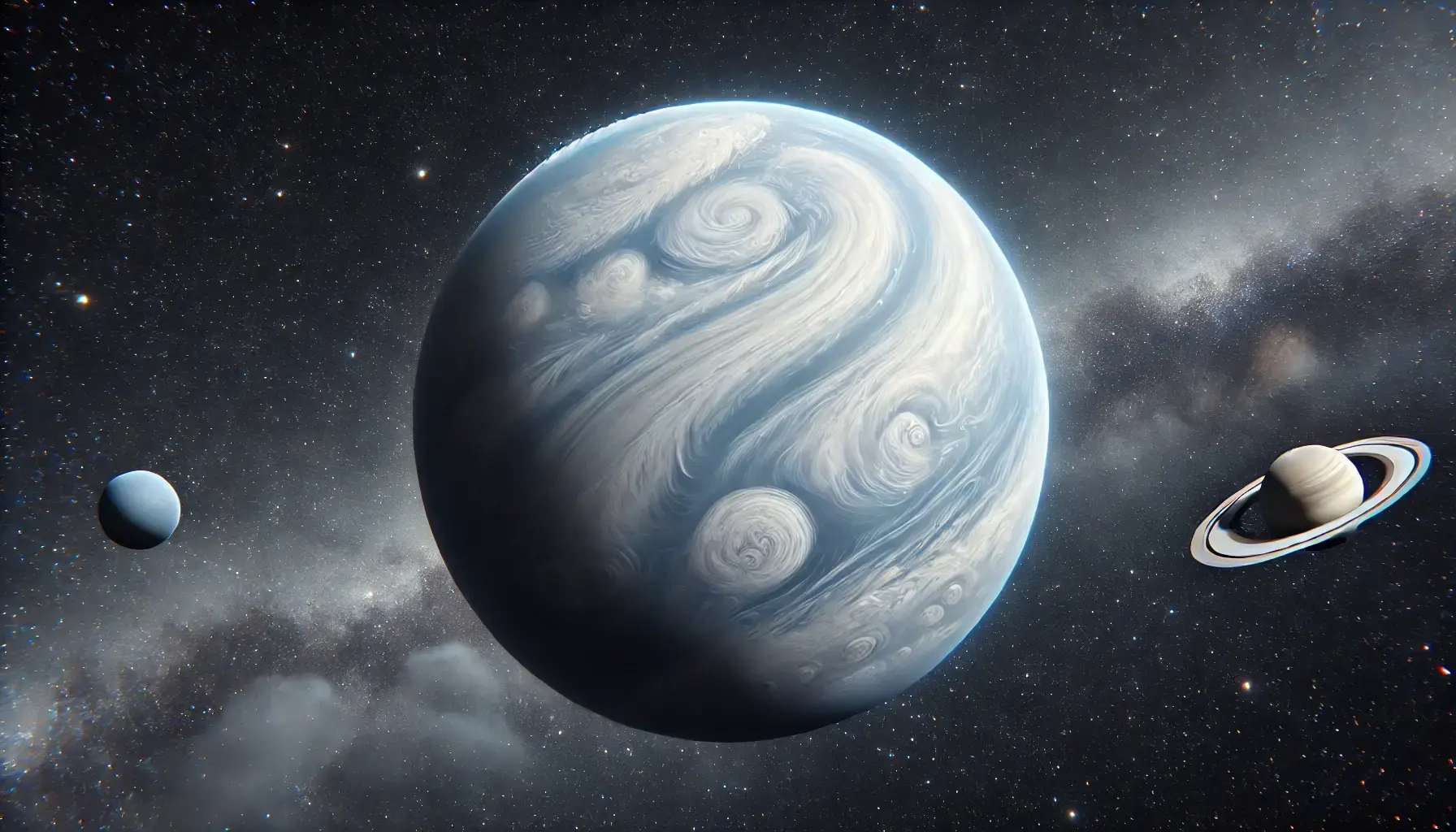
The atmosphere is primarily hydrogen and helium with a significant methane content. Methane absorbs red wavelengths, allowing blue and green light to scatter and giving the planet a pale-blue appearance.
Dynamics
Atmospheric processes include strong winds and transient storms. Wind speeds can become very high, and the planet’s rapid rotation produces cloud zones that are more dispersed and less stable than in more massive gas giants.
Conditions
Temperatures in the outer atmosphere are extremely low, near the condensation points of gases. The combination of low temperatures, chemical composition, and dynamic weather defines these planets’ climatic characteristics.
Significance
Observations of Aquilides provide insight into the diversity of giant planets and the physical processes governing climates in the cold regions of stellar systems.