Definition
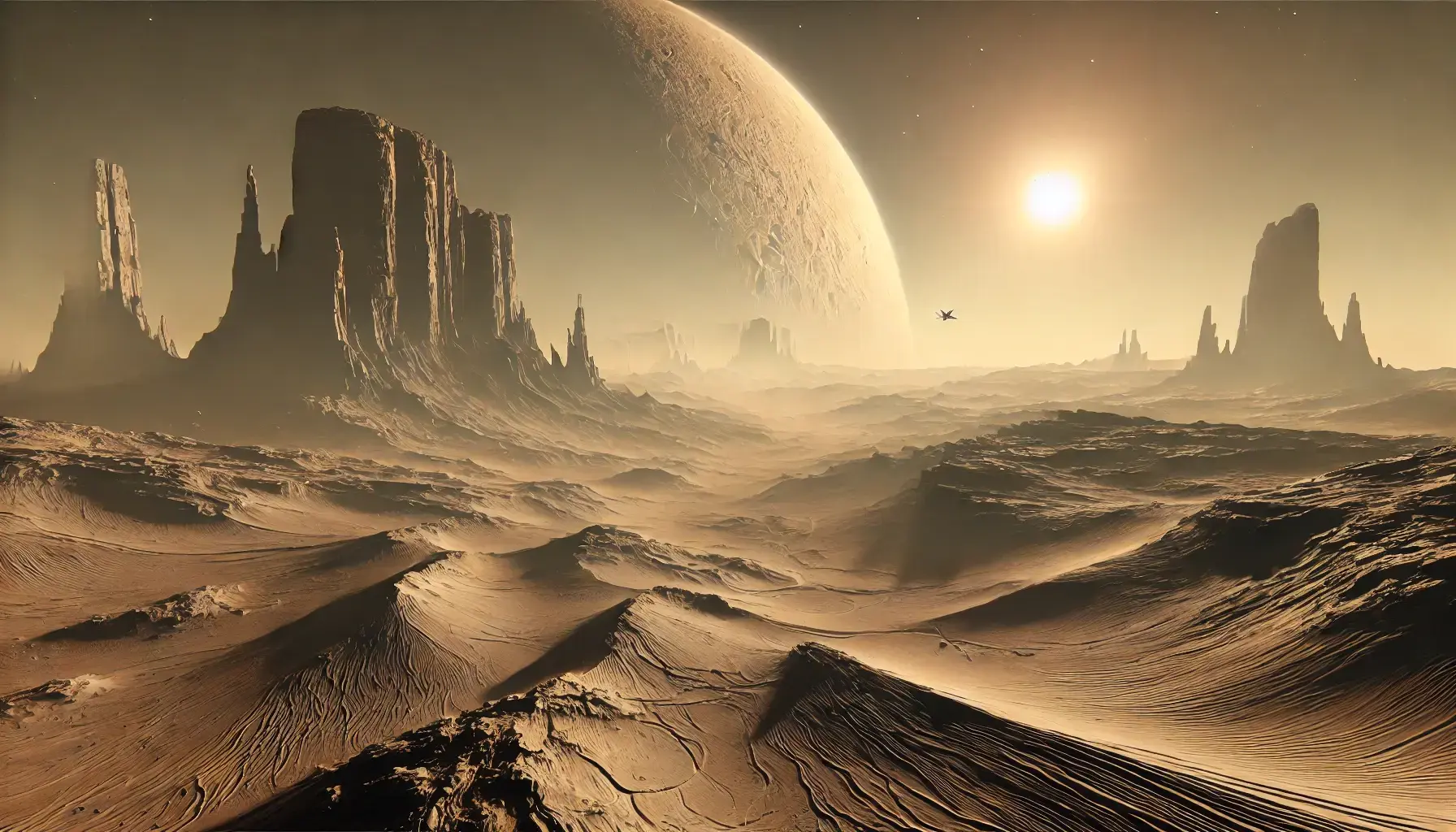
A planet of the Erythraea class is a desert rocky world, with vast plains, dunes, and a thin atmosphere mainly composed of carbon dioxide. The surface is shaped by dry winds carrying particles, creating erosional formations, valleys, and plateaus.
Structure
The atmosphere, due to its low density, prevents heat retention and causes large temperature variations between day and night. The lack of protection against radiation intensifies the slow disintegration of exposed rocks. Metallic oxides in the regolith layers give the surface a reddish color.
Hydrology
Liquid water cannot exist under current conditions. Traces of channels and dry basins indicate wetter phases in the past. Today, water exists mainly as subsurface ice or trapped in stable mineral layers.
Surface dynamics
The winds, although infrequent, raise dust clouds and move sediments. They contribute to the formation of dunes, sedimentary layers, and the slow change of topography.
Constraints
The conditions include very low atmospheric pressure, dust storms, and extreme temperature variations. These factors require specific technical adaptations for exploration or infrastructure construction.