Definition
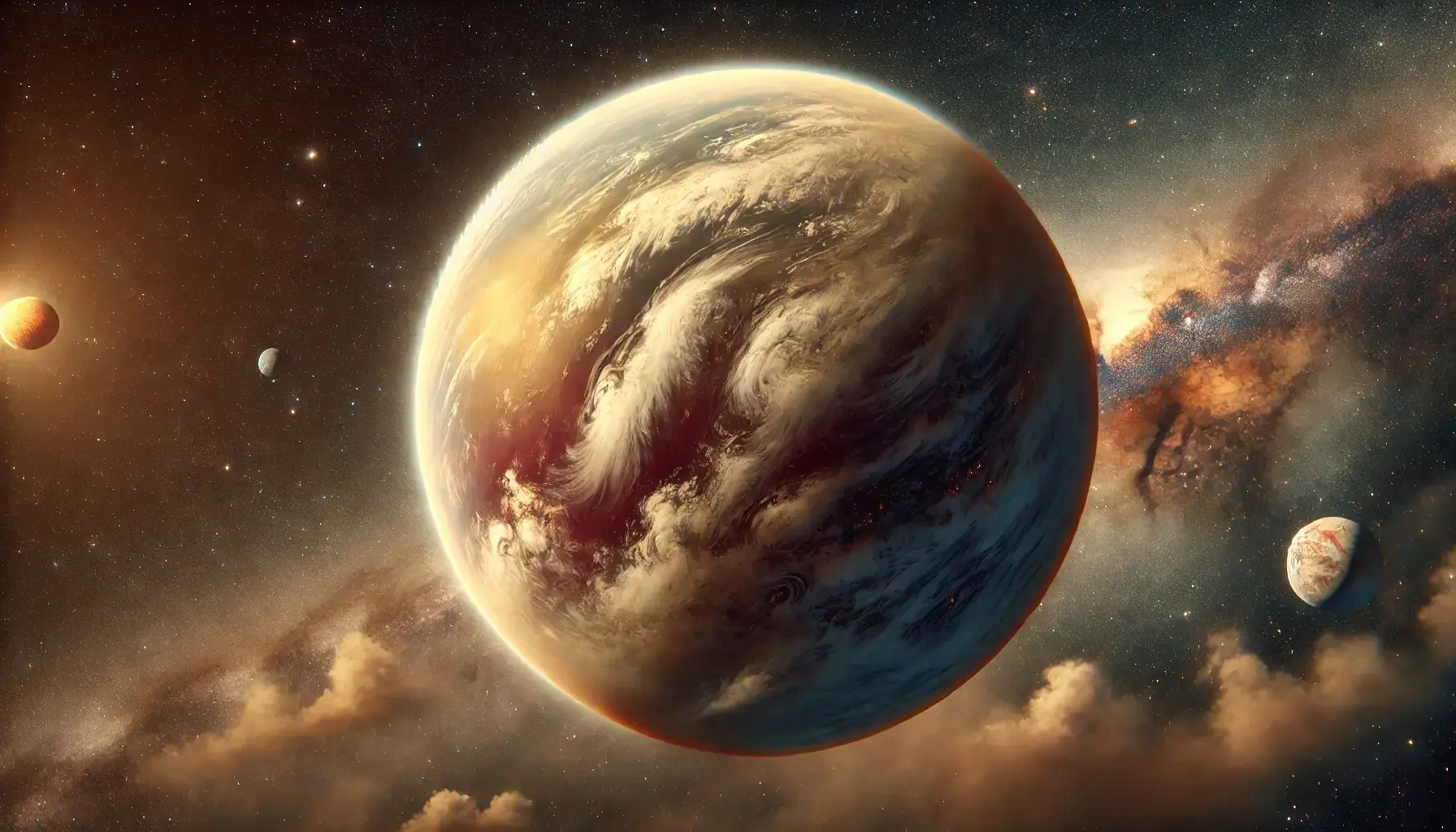
A terrestrial planet with a dense atmosphere is a solid body composed mainly of rocks and metals, surrounded by a heavy gaseous layer covering its surface.
Structure
The core is generally metallic, covered by a silicate mantle and an outer crust. The atmosphere forms an external layer dominated by gases that may include carbon dioxide, nitrogen, sulfur, or other compounds.
Function
The dense atmosphere regulates heat exchanges, traps warmth, and shields the surface from part of cosmic radiation. It influences weather, wind circulation, and the chemical composition of soils.
Evolution
Over time, volcanic activity, asteroid impacts, and chemical reactions modify the atmospheric composition. The greenhouse effect may intensify or weaken, directly influencing climate stability.
Limits
An overly dense atmosphere can prevent heat from escaping, greatly raising surface temperature. Conversely, progressive loss of gases reduces pressure and alters the planet’s potential habitability.