Definition
An S-type asteroid is a category of asteroids characterized by an abundance of silicate minerals and metals. Their spectrum shows signs of olivine, pyroxene, and iron-nickel, distinguishing them from carbonaceous asteroids.
Composition
These asteroids contain mainly magnesium and iron silicates, accompanied by metallic alloys. Their surface is often altered by solar wind and impacts, causing space weathering that modifies reflectivity.
Internal structure
The internal structure is heterogeneous, ranging from silicate-rich mantles to partial or absent metallic cores, depending on the degree of differentiation. Some S-type asteroids are considered fragments of already differentiated parent bodies.
Surface
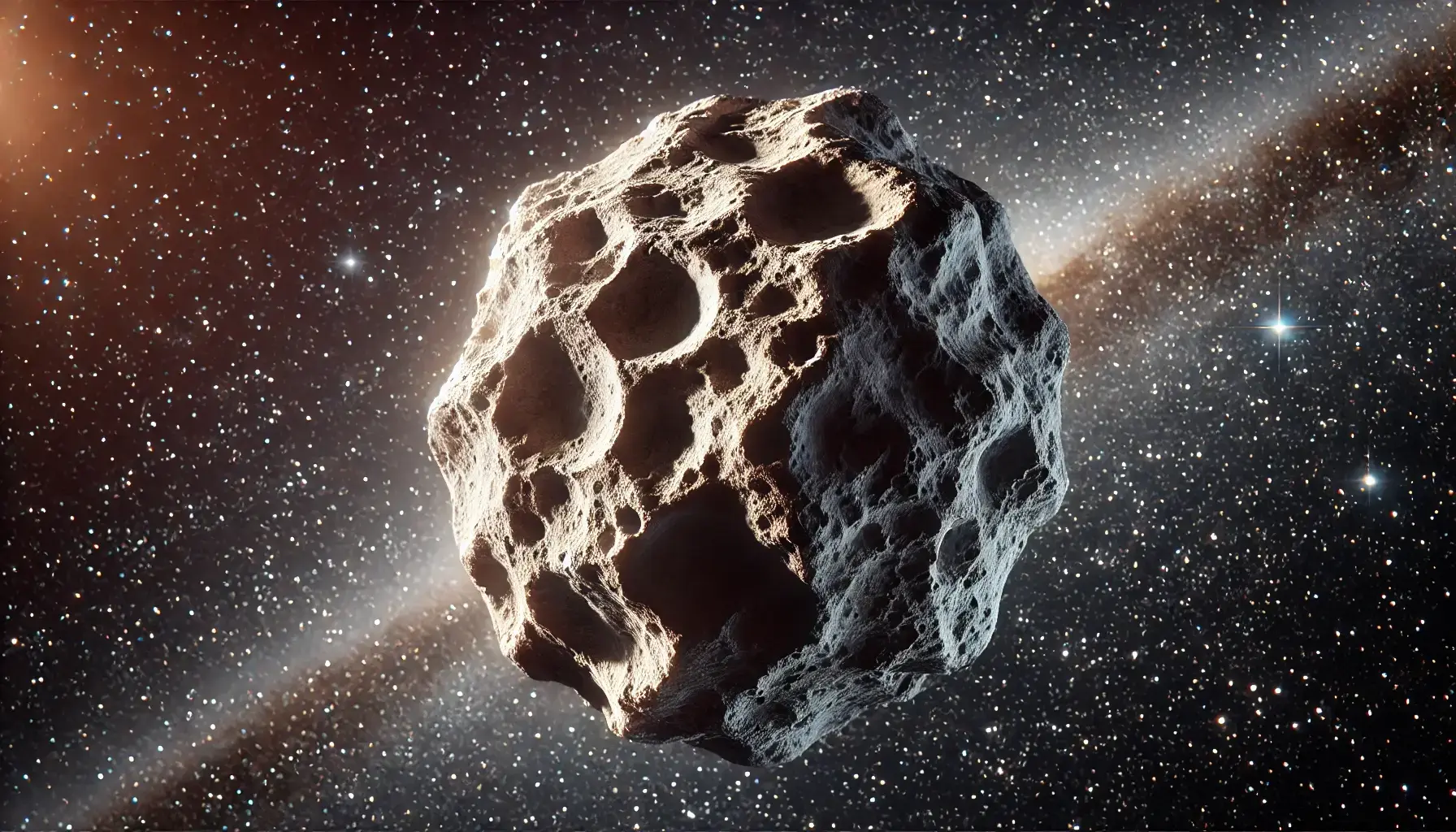
The surface is relatively bright, with higher reflectivity than C-type asteroids. It shows craters, fractures, and sometimes regolith formed by dust and debris. The color ranges from gray to reddish depending on the minerals and alteration.
Evolution
S-type asteroids bear witness to processes of melting and separation of materials in primordial bodies. Their study links the composition of stony meteorites found on Earth to their parent bodies in the main belt.
Limits and diversity
The S-type classification groups together various objects whose composition and thermal history differ. Some preserve primitive structures, while others show evolution marked by partial melting and differentiation.